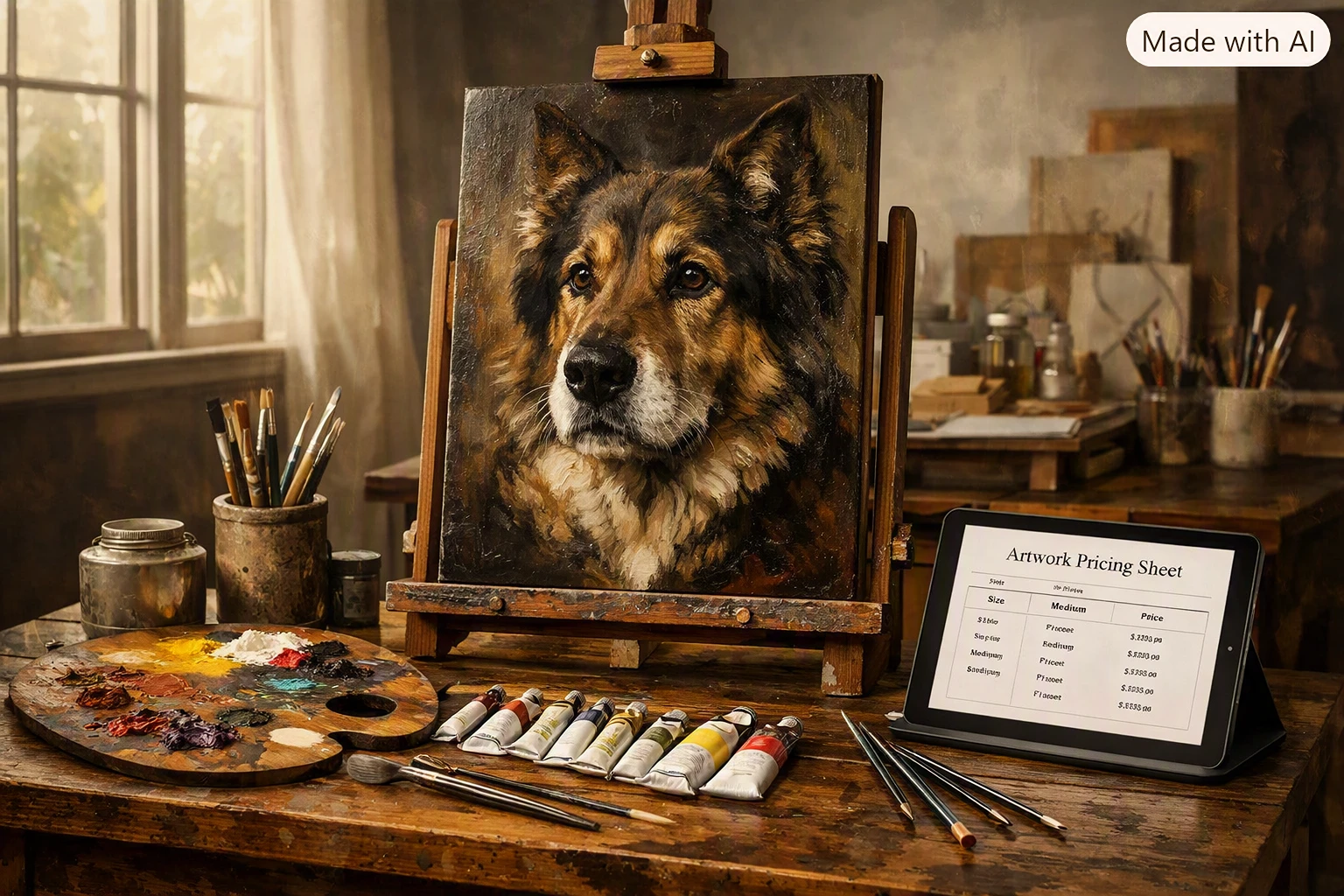
1. The Business of Paws: Creating Professional Pet Portraits
Pet portraits sit at a unique crossroads of art and emotion. You’re not just painting “a dog” or “a cat”—you’re documenting a family member in the eyes of your client. That alone raises the stakes: the work has to feel alive and recognizable, but it also has to feel personal.
This is where hobby work often diverges from professional commissions. Hobby portraits can be charming but inconsistent. Professional pet portraits combine:
- Solid drawing and painting skills (especially in the eyes and fur).
- A sense of empathy and observation, so the personality reads.
- Clear, confident business practices that help clients trust you.
In this guide, we’ll look at both sides: how to upgrade the look of your paintings, and how to present and market them as a serious service rather than “just a cute gift.”
1.1. From Hobbyist to Pro: What Changes?
Most artists who move into pet portrait commissions already love animals and can paint a pretty good dog or cat. The difference between a “nice hobby piece” and a professional commission usually comes down to three things: accuracy in the eyes, believable fur texture, and professional marketing that signals you are running a business.
If you get the eyes and fur right, and then package that skill inside a strong brand, your work stops being a commodity and starts being a legacy object—something people keep for decades and tell stories about.
1.2. Painting the Soul: Anatomy of Pet Eyes
In almost every realistic pet portrait, the eyes carry the emotional weight. Careful, layered work on the eyes is what makes the pet feel living rather than “dead‑eyed.”
1.2.1. Key principles for convincing pet eyes
- Get the shape right first: Draw or block in the eyeball shape accurately based on the breed and expression before getting lost in color.
- Work dark to light: Start with the darker tones (outline, pupil, iris shadows) to set the structure and keep the eye from looking flat.
- Balance blending and sharpness: The iris should feel slightly liquid with soft blends, but reflections and highlights must be sharp and defined to sell the wet surface.
- Use subtle color shifts: Reference photos reveal warm and cool tones. Adding hints of blue or amber gives a more three‑dimensional effect than flat brown.
- Leave highlight decisions for last: The final highlight should reflect the specific light source. Its placement is a deliberate step that defines the expression.
1.3. Fur Direction: Building Believable Texture
You don’t need to paint every hair, but you do need a convincing sense of direction, structure, and layering.
1.3.1. Study fur flow, not just color patches
Note where fur radiates out (like the nose bridge) and where it clumps or lies flat. Think in planes: block in the main value shapes first, then lay directional strokes that follow the form.
1.3.2. Matching brush to fur type
- Short, sleek fur: Use softer brushes and more blending with short, overlapping strokes that follow the body curve.
- Medium, fluffy fur: Use round or filbert brushes to suggest clumps and edges rather than every strand.
- Long or wiry fur: Use smaller detail brushes or liners for selected strands on top of broader shapes.
1.4. Reference Quality: The Foundation of Professional Work
Professional pet portrait artists repeatedly stress that the painting can’t be better than the reference. Educate your clients about needing high‑resolution photos with sharp eyes and natural lighting.
1.5. Turning Portraits into a Brand: The Power of the “Pet’s Story”
Don’t just post the finished result—share the “Pet’s Story” alongside your process shots. Storytelling humanizes your brand and helps potential clients imagine their own pet’s story being honored.
1.5.1. How to structure a “Pet’s Story” post
- A short narrative: Include the name, breed, and a memorable trait or anecdote from the owner.
- Process shots: Show the initial sketch, a detail of the eye mid‑way, and the finished piece.
- Your emotional angle: Share a sentence about what you wanted to capture or a favorite part of the process.
1.6. Certificates of Authenticity: Small Paper, Big Signal
A Certificate of Authenticity (COA) is a serious professionalism signal that formally records the artwork’s details and communicates that this is an original, documented artwork.
1.6.1. What to include on your Certificate of Authenticity
- Artist name and website.
- Title of the artwork (including the pet’s name).
- Dimensions, medium, and surface.
- Date completed and your signature.
1.7. Marketing Essentials Checklist
| Strategy | Action Items |
|---|
| Pricing | Use time‑based pricing internally to set public rates by size or complexity. |
| Content | Share before‑and‑after photos, close‑up details, and pet stories. |
| Client Experience | Use clear commission pages, simple contracts, and structured updates. |
| Delivery | Provide polished packing, a handwritten note, and care instructions. |
Professional pet portraiture isn’t just about nailing a likeness. When you honor a pet’s history with both your brushwork and your business practices, your commissions naturally move from cute products to trusted heirlooms.